















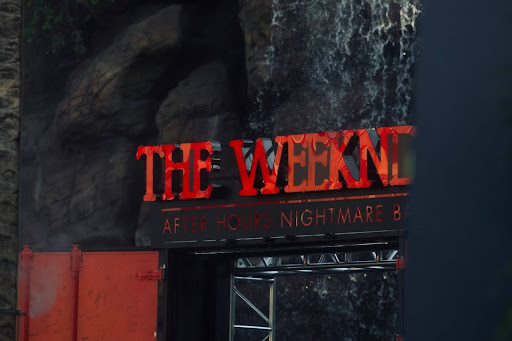
On May 16th of 2025, Abel Tesfaye, known in the music industry as “The Weeknd,” released Hurry up Tomorrow, the final album in his most recent trilogy. Featuring 22 separate tracks, it completes Abel’s tri-album journey from Hell, through Purgatory, to Heaven. It also illustrates the many reasons why Abel’s musical artist side isn’t a part of him anymore.
On the same day as the release of Hurry up Tomorrow, its sister motion picture was released under the same name. Though the movie wasn’t very well received, the two complete each other. Taking one from the other would make both stories incomprehensible.
Hurry up Tomorrow stands alongside After Hours and Dawn FM in Abel’s treacherous journey to save his own life. Alone Again, the first track on After Hours, is the beginning of the story. The Weeknd is telling a girl– whom we don’t know the identity of– how he’s not living his own life.
Take off my disguise
I’m living someone else’s life
As more lyrics fall into place, there’s increasing light on the situation.
Together, we’re alone
In Vegas I feel so at home
They’re in Las Vegas, likely on a date. Still though, something feels off. He mentions “Throwing 2,000 ones in the sky,” as well as asking, “How much to light up my star again?” It’s clear now; Abel is being broken up with and he’s offering anything to get her back.
I don’t know if I can be alone again
His biggest fear is being alone, and it seems his worst nightmares are coming true. This fear is the reason he threw all the money in the air; Abel was trying to buy her back. The next few tracks become a plea to get this girl back with him.
We’re in hell
It’s disguised
As a paradise with flashing lights
Abel slowly comes to realize where this all is now. He’s comparing Vegas to hell itself. Even through it, though, he’s able to reflect on his actions, apologizing to his ex. He tells her not to be scared to live– how she can move on. It’s a surprisingly good deed, contrasting much to what would be expected. He has everything he could ever want, yet still feels empty. Back to square one. He’s feeling so much now, seemingly not even feeling bad about ending his sobriety. Abel seems to have accepted the hell he’s found himself in.
I lost my faith
I’m losing my religion every day
It seems to be an ongoing downward spiral. He even gets arrested at one point, getting thrown into a cop car.
I ended up in the back of a flashing car
The next three tracks take a surprising turn. Abel is looking for her, through the streets of Las Vegas. With it being such a big city, the chances of the search being a success are highly unlikely. Nevertheless, the stars align, and there she is. Abel recalls her dancing in a crowded room, a nightclub. When she spots him looking at her, she cries. She still cares about him, and she hates it.
But then you saw me, caught you by surprise
A single teardrop falling from your eye
It’s a very strange encounter, Abel gives her the choice of getting back together or never having each other again. Despite the impossibility of it all, it seems like, for the first time in a while, something good is happening. It’s like the plot of a movie, almost too perfect of a comeback.
But, as we all know, this isn’t a movie; this is hell. When Abel is put into that cop car from earlier, we don’t get a clear transition to him being freed. In reality, he went into a coma, and his subconscious was telling him everything he wanted to hear. There was no reconciliation with his ex; it was all a dream.
Thought I almost died in my dream again
He was so near the one that would end all his misery, only for it to be stripped away. It’s all the worst pain he could imagine, as if he’s a soul forced into eternal punishment. This place only has pain for him. He needs to cut out every part of him that loves this girl, seeming to be the only way he could be happy, when it really just bleeds him out.
As the final track ties everything together, you come to realize the true meaning of this bizarre story that doesn’t seem to lead you anywhere. It’s not about Abel getting back with a woman, but about Abel trying to tell himself he doesn’t need this girl to be happy.
I keep telling myself
I don’t need it
He’s so desperate to believe this, just wanting to be happy. For now, though, it’s just not true. As the After Hours come to an end the sun starts to rise– enter dawn. Dawn FM starts with Abel as an old, broken soul, filled with regret. The first half of the album is Abel in purgatory, visiting old memories, accompanied by a mysterious radio station, with the voice of the album’s host, Jim Carrey, being the only one to guide him back to the light. Purgatory isn’t just suffering with no escape, like hell is. There’s an escape from Purgatory. It’s Heaven.
You’re almost there, but don’t panic
There’s still more music to come before you’re completely engulfed in the blissful embrace of that little light you see in the distance
Once the memories come to an end, we enter the second half of Dawn FM: going back in time, around the period following the After Hours. Abel is on a yacht on vacation. He meets a new girl, who says she just wants a couple pictures to make her boyfriend jealous. This is awfully similar to the relationship Abel had in After Hours. In a strange turn, the new girl ends up falling in love with him, pressuring him to become more than best friends as their relationship grows. Abel knows that he loves spending time with this girl, but fears dating will lead him into that loop he doesn’t want to relive. Eventually, they start dating, but this new girl is nothing but another soul in purgatory, just like Abel is. They’re both constantly trying to fill this void, desperate to feel alive. It’s no wonder they’re stuck here.
But you’re defeated baby
Broken, hurtin’, sufferin’ from a shattered soul
The next track, Every Angel is Terrifying, is a spoken word. It’s a recording without any singing, only speaking. It begins with direct quotations from Dunio Elegies, a book of poems published by Rainer Maria Rilke in 1923.
While we stand and wonder, we’re annihilated
Every angel is terrifying
The poem is suddenly interrupted by an ad from the radio station for a made up movie called Afterlife, explaining how it will solve every problem you could possibly imagine. It’s almost like it’s promoting heaven, and all you have to do to order the movie is call the phone number on screen. The odd part is, the ad gives two different numbers. One would lead directly to sin and immoral pleasures, like returning to his old life, while the other number, 1-800-444-4444, is an automated voice that reads back your own phone number. It doesn’t make a lot of sense now, but becomes important later.
Getting back on track to the story, Abel questions if there’s another man that his new girlfriend is seeing without his knowledge, finding her in a club, and remembering what happened on After Hours. Save Your Tears paints an identical picture. He doesn’t want to go through another breakup. He can’t handle it.
I don’t know if I can take it anymore
It’s like another death sentence, in the same setting as his life in After Hours. Abel thinks it’s different though because he believes the new girl is right for him this time. You can hear the pleading in his voice.
I’d rather you would die for me
Destiny
He’s gone down this road, and he doesn’t want to for a second time, but it’s already too late. The next track brings good and bad news. Good news, she didn’t break up with Abel. The bad news is that this girl is already married. His suspicions ended up coming to life.
Abel’s on the other side of the heartbreak on After Hours. He’s the one being cheated on this time, and he can’t be with her anymore. There’s no progress in Abel’s relationships at all, and the end of the song comes with the end of their relationship. Again, back to square one.
I can’t be with you
No, I can’t be with you
He can’t seem to break the cycle, never getting out of these pointless relationships. The next song, Less Than Zero, seems to bring back the older version of Abel we saw at the beginning of Dawn FM. Again, he’s looking back on more memories, talking to a girl. Is it his girlfriend from After Hours? His new one in Dawn FM? At this point, it’s just not important anymore. If he can’t break the cycle, why should it matter? He always needs someone to be with, someone to give him meaning.
The sixteenth and final track on Dawn FM is Phantom Regret by Jim. Given how the three albums in the trilogy represent Hell, Purgatory, and Heaven, you’d expect this mysterious guiding voice to direct him straight to that magical land up in the clouds. He doesn’t though, instead offering him a few words to wrap up those 60 minutes of music he promised in the first track.
So sit back and unpack
You may be here a while
This Purgatory he’s in isn’t a prison nor a punishment; it’s a place to make him realize that it’s him who needs to make himself undergo change. It’s not about any of his girlfriends or the pain they both go through, but about himself. He can’t break the loop of getting into these relationships that always go south, evident by him finding another broken soul in purgatory to take the spot of the previous one so he doesn’t feel alone. He has to learn to live without it.
Were you ever in tune with the song life was humming?
Some fans noticed that the first track, Dawn FM, and the final track, Phantom Regret by Jim, have the same sounds in the background of Jim Carrey’s voice. If he doesn’t break this cycle of regretting all these relationships he let turn bad, he won’t ever make it to heaven, he’ll just go back to the first song, and repeat the whole process over again.
Heaven’s for those who let go of regret
And you have to wait here when you’re not all there yet
But you could be there by the end of this song
Where the Weeknd’s so good and he plays all week long
All his life, he’s been stuck here, trying to reach that little light that he’ll never be able to touch, no matter how close he thinks he is. If you were in his shoes, it seems like it would be really easy to ponder if it’s even possible to truly reach heaven. Even with those doubts, there is, and it’s not by bringing himself to that little light, but having that light bring itself to him.
Heaven isn’t something that he can reach, it’s something that he has to surround himself by.
God knows life is chaos, but he made one thing true
You gotta unwind your mind, train your soul to align
And dance ‘til you find that divine boogaloo
If you remember that movie called Afterlife from Every Angel is Terrifying, you’ll know that to order this amazing experience, to order heaven, it gave you those two different phone numbers. One leads Abel back to the place he was in the After Hours. You can call that number for your old, deluded version of Heaven, go back to your old ways, repeat that pointless loop all over again, or call the second one. As previously mentioned, it’s an ANI. It spits back your own phone number, who you are. Heaven is exactly that. It’s you.
In other words
You gotta be Heaven to see Heaven
May peace be with you
With that one true light revealing more and more of itself, the Dawn is over, and a new day has come. Tomorrow. Hurry up Tomorrow is an album completely different from the first two. Instead of straying further away from this light, as he did on After Hours, instead of trying to constantly find a new girl to be his guiding light, as he did on Dawn FM, we find him truly chasing it. At last, he’s coming face to face with it, trying to come back to his faith and his religion. If he doesn’t have a woman to be his happiness, all he has is the man he’s made for himself: The Weeknd.
Are you real, or are you an illusion?
On After Hours, it was obvious that The Weeknd had a lot of flaws, and Abel feels like he needs to fix up this second side of himself. Still though, parts of him still shine through. On Cry For Me, the second track, he starts off by trying to call a girl. It seems like he’s only going back to that cycle, but for the first time, that’s not the case. There’s incredible progress, as he learns not to be dependent on the flawed light he used to follow.
And I hope that you still cry for me
Like I cry for you
These lines stand in contrast to the message of Save Your Tears; now,he wants her to shed them. They know they miss each other, but Abel is moving on. In the Hurry Up Tomorrow movie, he’s seen returning back to his routine. Abel goes on tour, works on new music, and hears the cheering and praise he gets from his fans. It’s very refreshing after the constant struggle of the past two albums.
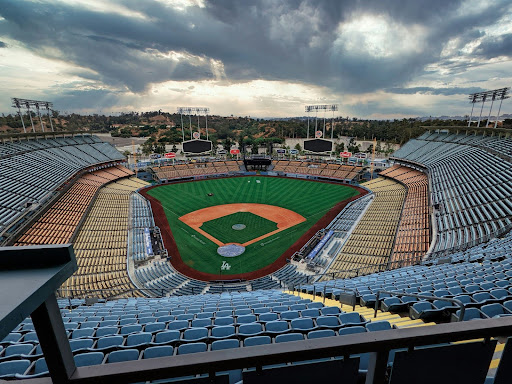
The third track is an eight-second skit based on a true story. While on tour, Abel was performing Alone Again in SoFi Stadium when he lost his voice, having to cancel the show. It made him reconsider what his music career truly is. He thought his voice broke because it was done. He’d said what he had to say. It’s an interesting song because of how this album, seemingly a metaphor, can parallel his real life.
No, it’s my voice, okay?
I can’t sing
In that little piece of time, all the stress went away for a minute. Without his singing, The Weeknd doesn’t exist. He begins to wonder, what if The Weeknd himself is that void he’s constantly trying to fill?
Focusing back on the story, the corresponding movie scene introduces a major new character. As Abel is panicking on stage, his eyes lock with a girl in the crowd. It’s very abnormal. SoFi stadium seats over 70,000. What’s special about this random girl? For a brief moment, that’s put to the side. Abel now knows what he truly needs to live happily. He needs to get rid of The Weeknd. It sounds insane, but after all he’s been through, does it sound crazy anymore?
Every time I hit the road, it takes a piece of me
São Paulo, the fourth track, opens with Portuguese lyrics from artist Anitta. Essentially, that girl Abel’s gaze met earlier is going to end the night in his bedroom. Interestingly, for the first time, we’re actually given something to call her. Her name is Anima.
It doesn’t really make sense. Just four songs ago, he was trying to chase away these temptations. Now, he’s… returning to them? We don’t know what happened. It feels like he’s returning to his persona on After Hours. It’s frustrating to see all the progress he made go down without a second thought. Anima, however, seems different from any girl The Weeknd described. She doesn’t care for money and Abel isn’t Abel when he’s with her. It’s odd seeing the contrasts. She really cares about him, telling him what he actually needs to hear. After everything that’s been gathered, you wouldn’t expect Abel to be dating someone who does this for him.
It’s never easy falling in love again
Abel feels it’s easy to fall into another trap, like he has time and time again. There’s still this feeling of being stuck. It seems like he can’t move, becoming this version he doesn’t want to be. Anima’s love for him has grown, but she often pressures Abel for his honesty, which leads to his first negative impression of her.
Why bring this up right now?
You know it’s my opening night
It’s his first concert since he lost his voice. Is it a valid excuse though? It’s not easy to be such a popular singer, especially during such a return. He can only hope, despite the conflict, Anima won’t let him down, not now.
Blood on the ground
When they take my crown
He seemingly wants to die when he’s at the top, when he’s king. However, he doesn’t mean wanting to take his own life; he wants to take the life of The Weeknd, the career side of him. His music career is at its peak, and that’s how he wants to end it.
In the middle of the ninth track, Reflections Laughing, there’s a voicemail left for Abel, interrupting the music as it plays out. It’s likely from Anima. She tells Abel things about himself, things you wouldn’t expect her to know.
I just hope you’re not back to the old you
That line shakes things up. How does Anima know what the old Abel was? That side of him isn’t supposed to be something she knows about. Anima wasn’t with him then, so it’s just not possible, is it? It seems like her only goal is to do what’s best for him. She doesn’t want to be paid and she knows more of him than anyone. It’s like Anima is a part of Abel.
Feels like you’re a part of me
If you watch the movie, there’s even more brought to light. Before they even encounter each other, Anima is seen holding a picture of what looks like Abel as a baby without any mention of how she got it. She was the only one he noticed when he lost his voice, was somehow able to evade security, get backstage, encounter him, and get in a car with him. It doesn’t make any sense if you take it at face value.
Putting the word “anima” into Google is enough to reveal anything; it’s the feminine part of a man’s personality. Abel is Anima in the sense that she’s a part of him. This saving grace, who only wanted good for Abel, is him. If you remember Phantom Regret by Jim, he mentions needing to be Heaven to see Heaven. This angel was who he was, and it only first appeared when he questioned leaving The Weeknd behind. If you took away all the pain he went through on the three albums, there wouldn’t be anything. The Weeknd is only a side of him existing through his pain. Ending him would solve everything, but would it come easy?
Guess I could be healthy, but I’m tryna find a reason
The 11th track, Given Up On Me, answers. If he gets rid of The Weeknd, that monster of a persona he has wants to die now, at his peak. Think about it, he could keep going, The Weeknd could stop making painful songs, but what would it make you feel? The only reason you listen to it at all is to feel his pain. Take that away, and the music is pointless. He chose to make music like this, and we stuck around to clap for him at the end. We enjoyed the show, yet for some reason, Abel keeps trying to help The Weeknd. This side of him just wants to see the end, yet Abel just won’t let go.
I could never leave you alone
By the end of the song, we’ve reached the halfway point, where Abel is coming to realize that he might not be able to heal this other side of him. Who knows? Maybe it’s better off this way. With less and less of Abel’s mind focusing on music, he’s becoming happier and calmer. He’s even been returning to his religion, which he lost on After Hours. His confidence grows the further he strays from the industry. Maybe The Weeknd won’t be ending after all.
It don’t matter what they say I’m timeless
On Niagara Falls, track 14, we learn about Abel’s relationship with the girl on the first album. He tells us that the time was “before the sun goes down” or before the After Hours. It’s a happy memory to look back on, how their relationship was before any of the hurting. Even if it’s not the last time she’s mentioned on the album, it’s a good way to end their story on a high note.
Take Me Back to LA is the 15th song, and it seems to directly contradict Escape From LA on After Hours. He wants to go back and be that innocent soul he was before everything with that girl was ruined.
Take me back to a time
When my blood never tasted like wine
Unfortunately, he has to realize it isn’t right for him. Sure, it would probably be fun for him to go back to that time, but that’s just not what he needs.
It’s better when I’m by myself
Abel even recognizes this. Every time he went through all that pain, like we’ve seen him do so many times, it was because of a girl he was with. He can’t have a happy relationship because of who The Weeknd is. There’s always screaming and crying involved, it simply doesn’t work. Looking back on the halfway point on Dawn FM, when he’s not dating, he seems more relaxed and joyful. It’s what he needs to be free of worry, even when he goes back on that idea two verses later.
I hate it when I’m by myself
He’s better when he’s by himself, yet he hates it. It’s the perfect answer to all that he’s done in this trilogy. He might be that version of Abel that he wants to be, but it would only be accomplished by living through the one thing he hates the most. It’s impossible to live happily under such a contradiction and this time, The Weeknd needs to go. Abel and The Weeknd simply can’t live together inside one body anymore.
Tracks 17 and 18, Give Me Mercy, and Drive respectively, see our two characters pull away from each other and each give their last words. Give Me Mercy begins with The Weeknd talking to God, asking for his forgiveness. He just wants all his sins cleansed from him before he inevitably moves on.
Every time I lost my way, I lost my faith in you
Drive, as noted, is a song from the eyes of Abel following the split. Many have theorized that Drive is a track sung by Abel’s soul that he’s slowly gained back on Hurry Up Tomorrow. It’s similar to Anima. Abel wants to find something new, something away from fame, away from this other side of himself.
I just want to drive, I just want to drive tomorrow
It’s yet another metaphor hinting at his own life, as this is what he did when he released the album. That was it, he was done with The Weeknd, done with music, and these final few songs will give us our ending to his old persona. He’s basically watching himself fade away, ready to regain his innocence.
You’ll always be a part of me
Just turn the key
At long last, we’ve reached track 19, The Abyss. The Weeknd has jumped into this dark abyss, and he’s waiting to reach the bottom as he regrets everything that led to this moment.
I don’t like the view
From halfway down
These lines were noted to be inspired by a poem titled The View From Halfway Down from the sitcom BoJack Horseman. It’s a poem about regret, but The Weeknd leans toward more of the fearful side. How will the public react to seeing Abel without a character to go along with himself? In the end, he decides it was the right choice.
Right before the bottom of this dark nothingness, he pulls some final words that come up in a previous album.
You know my heart belongs to you
His words are almost identical to a line from the second to last track on After Hours, where he gives his final words to the girl that broke up with him at the start of the trilogy. She’s the final thing on his mind before disappearing deeper and deeper into the darkness.
Red Terror, Track 20, changes up the perspective quickly from the Weeknd’s final words. It’s a unique song, as it’s sung from the perspective of Abel’s mother. It paints a picture of her talking to baby Abel. It’s comforting to look back on this memory, similar to what he did on the first half of Dawn FM.
Hush, my child, you’re mine
The name of the song is a direct reference to the Ethiopian Red Terror, a violent, state-sponsored campaign of political repression. Lasting from 1976-1978, it was the exact time Abel’s mother left Ethiopia to seek refuge in Toronto, where he was born in 1990.
I ran from the terror
The ground was red from the led
[…]
My only intention, alone, I left to the west
Then moved to the city, eight months, we were pregnant
You came out so precious, in the snow, you would grow
The song essentially summarizes to an apology from Abel to his mother. She’d always just tried to protect him, and he can’t help but feel the need to acknowledge that in this track.
The outro to Red Terror is similar to the intro of Every Angel Is Terrifying. Abel reads from the poem Death Is Nothing At All by Henry Scott-Holland. It’s a poem often read at funerals, which is fitting since we’re near the end of the trilogy. It seems like the whole story is each of these characters are here to pay their respects. Even Abel’s mother shows up, most importantly though, is us.
Call me by the old, familiar name
Without missing a beat, we’re taken to track 21, Without A Warning. It’s meant to be some more words from The Weeknd, who is likely speaking from the abyss he’s falling into. He expresses the complexity of the relationship with his fans. This pain he goes through on these albums are nothing but entertainment in our eyes.
I should have been sober
But I can’t afford to be boring
These albums are only good because of the problems. They happened to try and make you feel something, and it worked. The Weeknd made a huge impact on the music scene in recent years, making some of the best music of the current era of R&B and pop. His music was great then, and it’s going to be great forever. The track Death Is Nothing At All perfectly illustrates what The Weeknd thinks. He’ll be remembered no matter what, but it seems so impossible to let go. The Weeknd’s career lasted over 15 years. When that side of Abel disappears, where would he even go from there? When he’s just Abel, what could you even imagine him doing next? With one song left, there’s no option but to find out.
Hurry Up Tomorrow slots 22 on the tracklist to end the trilogy. This song seems to ditch any metaphors, showing just Abel since The Weeknd isn’t available anymore. Even if all he’s been through all of the suffering because of The Weeknd, it’s come to a point where it doesn’t seem to matter anymore. It’s all just his own perspective.
My love’s fabricated
It’s too late to save it
These lines bring out the element of brutal honesty seen in this track. To Abel, there’s no point in keeping anything a secret if it’s the final song in his music career. You’d expect a definite happy ending, like some lyrics about how he’s found his own peace, but we don’t get that. Abel is still riddled with the uncertainty of leaving the music industry. He doesn’t know if he’ll be able to live a happy life, even worrying about whether he’s too far gone to go to Heaven.
I want Heaven when I die
I wanna change
He even goes as far as to apologize to the women he’s hurt over the years. There were many to keep track of, and they were all there to try and fill this void in Abel. That void has been present since the start of the trilogy, back when he got broken up with on Alone Again.
I took so much more than their lies
They took a piece of me
Abel’s father left him and his mother when he was very young, and all these women he’s had leave him were all a desperate attempt to fix that emptiness of not having a father he discovered at such a young age. Them abandoning him gave him that heartbreak he’s all too familiar with, which is why it seems like the end of the world each time he loses a relationship.
I’m done with the lies
I’m done with the loss
The whole trilogy, The Weeknd spent all his time and effort in an accumulated attempt to simply not be alone. It was his worst fear, dying from it. Yet, when he did end up dead, he allowed Abel to finally live.
I want to change
I want the pain no more, no more, no more
With that, it would be easy to assume the story is over, that these lyrics represent Abel at last let him free. It’s a reassuring thought to have. It would be so satisfying to know for sure that he ends up happy, yet the final strain of the track throws everything back into the metaphorical sense every album of his is consumed in.
The final seconds of Hurry Up Tomorrow perfectly transition to the beginning of a song called High for This, which is the first song of The Weeknd’s first mixtape, House of Balloons. It leaves you to decide what happens, similar to the end of Dawn FM. It’s like Abel wants you to question which path he goes down when the album ends.
It’s not hard to tell that Abel wants the ending to be a mystery, but what didn’t change was what he went through. He knows that he doesn’t want to go back to making music, since the best sad songs required him to live through that same pain just to gain success. Think of the first album in the trilogy. After Hours was constant suffering, always the worst possible outcome, yet it was the biggest success of his career. Dawn FM was his reflection on that pain, along with the decision of returning to the pain or leaving his fame behind. Hurry Up Tomorrow sees him finally separating from the sadness, at the cost of stepping away from success.
The Weeknd was such a big artist, and to see him quit at his peak was certainly shocking, but the entire trilogy serves as proof that it wasn’t a mistake. Music was bleeding him out, and he said what he had to say. His fans would certainly love another album, but if not, this final trilogy was an amazing way to go out.