












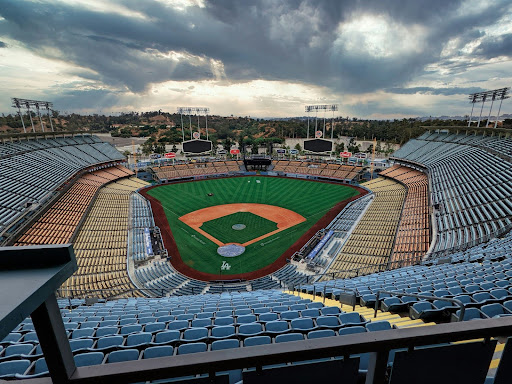
Every October, 12 Major League Baseball (MLB) teams battle for a spot in the World Series. After a total of 2,430 games across 30 teams, the postseason kicks off. The first playoff games this season took place on Sept. 30 in the Wild Card round, a best-of-three that feeds into the Divisional Series. Four of the teams with the best regular-season record get a bye during these games and head straight to the Divisional Series (a best-of-five series played after the Wild Card Round). Only eight teams have won the World Series after starting in the Wild Card, but the defending champion– the Los Angeles Dodgers– looked to accomplish just that.
Coming off their sweep against the Cincinnati Reds, the Dodgers came out on top against Philadelphia in the Divisional, taking the series 3-1 before facing the Milwaukee Brewers. The Brewers had the best record going into the postseason, but the Dodgers wasted no time, taking four games in a row to sweep.
The Toronto Blue Jays, on the other hand, were riding a more recent high, squeezing out their first World Series appearance since 1993 in a thrilling seven-game Championship Series against Seattle. Toronto was forced into trailing zero games to two, but clawed back with their four wins. Seattle could only take more before their defeat. Seattle is the only MLB franchise that has never been to the World Series.
The Dodgers and Blue Jays each have their respective star players. For Los Angeles, they have Shohei Ohtani, who put in much of the work to win the series against the Brewers. His performance in game four was unforgettable. Ohtani struck out 10 batters in six innings while also clubbing three home runs to clinch their World Series spot. On the other side of the Series, Toronto has its star first baseman, Vladimir “Vladdy” Guerrero Jr. Guerrero Jr. led the postseason in hits, runs batted in, and home runs going into the World Series.
The Fall Classic itself was thrilling, stretching all the way to seven games before the Dodgers took the trophy. Game after game went by, neither team willing to back down. Each matchup offered its own moment of shock and excitement. In Game 1, Addison Barger hit the first pinch-hit Grand Slam in Series history en route to the 11-4 win. In Game 2, Dodgers pitcher Yoshinobu Yamamoto hurled a 105-pitch complete game, allowing only one run through all nine innings, earning the 5-1 win. Game 3 lasted 6 hours and 39 minutes, featuring 18 whole innings. As the seventh inning ended, the game was tied at 5-5, where the score would stay for 11 innings, when Dodgers first baseman Freddie Freeman ended the game with a solo home run to center field, his second game-winning home run in the World Series. Game 4 started fairly slowly, besides Guerrero Jr.’s two-run home run in the third. Following the home run, both pitchers held the other team to three scoreless frames before the Jays exploded in a four-run seventh inning. The Dodgers were only able to take back one run in the bottom of the 9th before Toronto took home the 6-2 win, tying the series at two wins each. Game 5 is always an important match, especially in a 2-2 series. Blue Jays rookie starter Trey Yesavage took this as no joke, having a stunning performance. The rookie dealt for seven innings, giving up one run on three hits with zero walks and 12 strikeouts, setting the single-game World Series record for strikeouts by a rookie. Yamamoto pitched again for Los Angeles in Game 6, remaining the Jays’ kryptonite. After Toronto fell 3-1, the winner-take-all Game 7 was set. Lasting 11 innings, it was the first of its kind since 1997. The Dodgers were able to muscle out a 5-4 victory, sealing their third consecutive championship, which could likely repeat next season.
Overall, October 2025 was one of the most thrilling playoffs that has happened in quite a long time, and it is anyone’s guess what the coming year will bring for the MLB. Whether the Dodgers continue their streak of championships or a new team halts their reign, this next season will surely be one to look forward to.