


















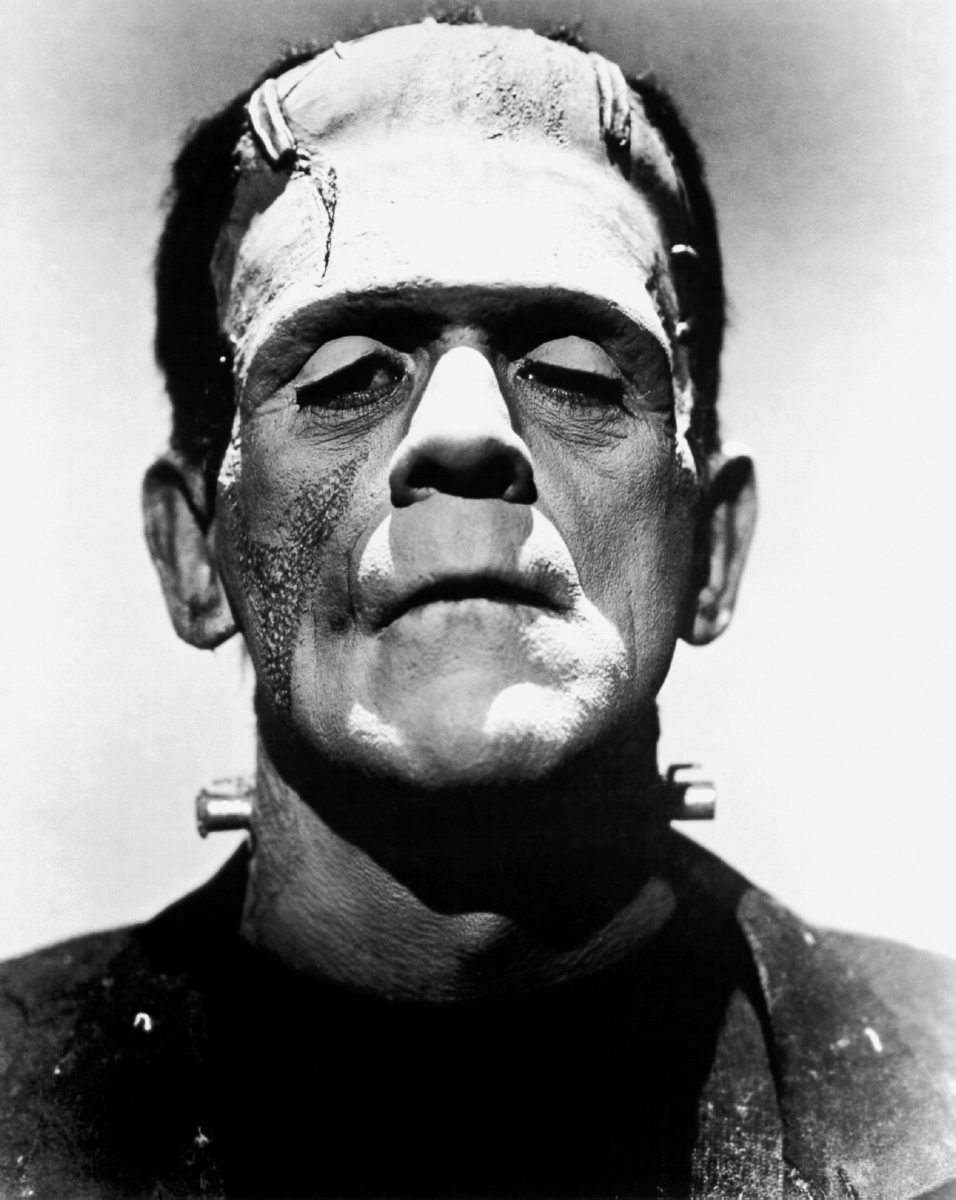
The newest Frankenstein movie, directed by Guillermo del Toro, was released on Nov. 7, 2025 and has become a phenomenal sensation . The novel Frankenstein by Mary Shelley was published anonymously in 1818 and republished in 1831 under her name. The Frankenstein movie was released through the streaming service Netflix. The cast is full of many stars, including Jacob Elordi, Mia Goth, Oscar Isaac, and Christopher Walz. The movie was filmed in Edinburgh to replicate the Victorian aesthetics.
Mary Shelley was originally inspired to write Frankenstein because of a trip with Lord Byron, John Polidori, and her husband Percy Bysse Shelly. While they were staying the summer in a villa in Lake Geneva, Switzerland, Lord Byron challenged everyone to write a scary story, which led to Frankenstein being born. Her book is also referred to as The Modern Prometheus because of its reference to Greek mythology. Prometheus was a figure who stole fire from the gods and was punished for it by having an eagle eat his liver everyday. Since the book is over a century old del Toro asked himself, “do you repeat the whole scene from a different point of view?” to convey both aspects of the story. The difference in inspiration for Shelley’s original work and del Toro’s modern interpretation poses the question: how do these works differ while telling the same story of a man and his creation?
Firstly, the book and the movie have slight differences between the characters and their relationships with each other. In the novel, Victor marries his adopted sister, Elizabeth, but, in the movie Elizabeth marries William, Victor’s brother. Another difference between the book and the movie is the age gap between the brothers. The age gap in the movie is unspecified but William seems to be around 10 years younger than Victor whereas, in the book, he is 16 years younger. The movie also alters the lifespan and death of William. In the novel, William was murdered by the creature when he was a child. In the new adaptation, William is an adult when he is murdered by the creature. The movie also leaves out characters like Justine, the maid that the Frankenstein family rescued from another country, and Henry Clerval, Victor’s best friend and loyal companion. Henry Clerval was replaced with Henrich Harlander, who is Victor’s adviser and Elizabeth’s uncle.
The overall tone of the story also differs between the novel and the movie. Written during the Enlightenment and Romantic Era, Shelley’s novel explores the themes of philosophy, reflection, and the fatal flaw of man, all while portraying the story in a dark and bleak manner. The novel starts out hopeful as Victory manages to defy death by bringing a creature to life, but quickly turns dark after his experiment goes wrong. This is where the alternate title, The Modern Prometheus ties into the book. Victor is paralleled with Prometheus to show that he overstepped his abilities. He attempted to make a perfect man, but created a monster who brings suffering on those that he loves, and he lives with the consequence that his creation brings misery into his life. In comparison, Prometheus stole fire from the gods to bring human life into the world, but instead created rabid creatures whose intent was that of harming each other. Victor and Prometheus both take on the role of the creator who has to pay for the actions of their creation.
The movie, however, takes on a very different stance. It approaches the story as one of family trauma and the need to become something great. This is evident through the harsh anatomy lessons Victor’s father gives him. His father even whips his own son when getting the question wrong.
The movie incorporates Gothic elements but, in typical Hollywood fashion, the plot is more dramatized. It also focuses more on the emotional side of things, shedding light on the relationships between all the characters and providing a redemption arc for the creature. Victor falls for his brother’s fiancée, resulting in the creature forming a bond with Elizabeth, which inevitably leads to her death. The creature tells his side of the story, showing how he was treated as an outcast and left to die in the wild, which tugs at the viewer’s emotions, calling for sympathy.
Overall, both pieces have their own respective differences that make them unique. Analyzing them side-by-side to highlight their differences goes to show how the message is relatively similar, but can be interpreted in many different ways. The movie visually demonstrates the complex language of the novel in a manner easiest for all audiences to interpret. Frankenstein is one of the most widely adapted stories, and highlighting the different perspectives demonstrates a broader understanding of what the message truly is.